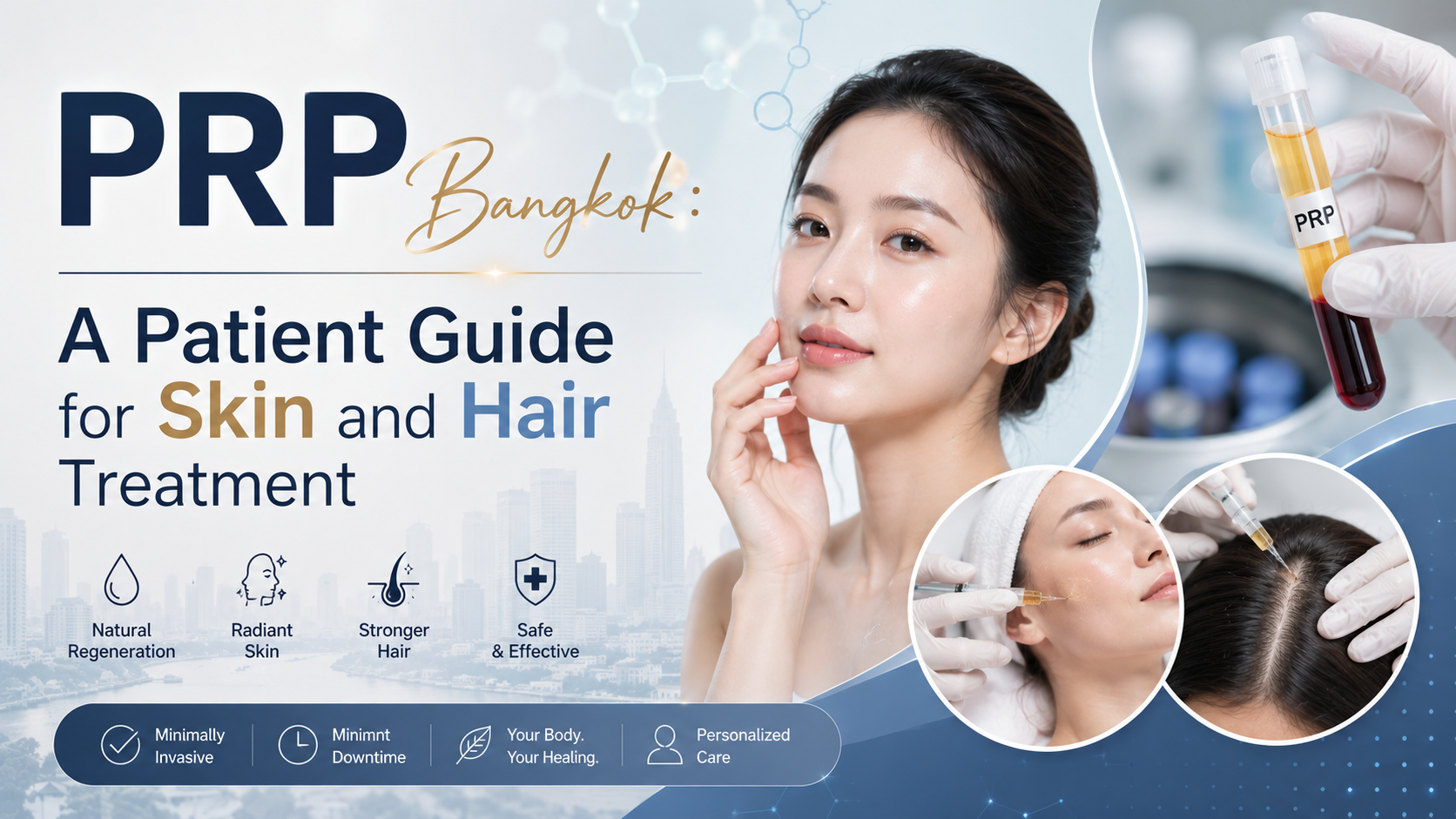
PRP Bangkok: A Patient Guide for Skin and Hair Treatment
Considering PRP treatment in Bangkok? This evidence-informed guide explains how platelet-rich plasma is used for skin rejuvenation and hair loss, including expected benefits, limitations, treatment sessions, recovery, safety and costs for international patients.
PRP treatment in Bangkok is a medical procedure that uses platelet-rich plasma prepared from the patient’s own blood. Doctors use it to support skin repair, improve selected signs of skin ageing and manage certain forms of hair thinning. Benefits develop gradually, and suitability must be assessed individually by a qualified doctor.
For residents, expats and medical tourists comparing PRP treatment in Bangkok, it is important to understand that “PRP” does not refer to one standardized formula. Preparation systems, platelet concentration, injection techniques, treatment schedules and individual biological responses can vary.
What is PRP treatment?
PRP stands for platelet-rich plasma. A small amount of the patient’s blood is collected and processed in a centrifuge to separate plasma containing a higher concentration of platelets. The prepared PRP is then injected or applied to the treatment area by a qualified medical professional.
Platelets contain signaling proteins involved in tissue repair. In aesthetic medicine, PRP may be used for facial skin, the scalp or alongside another procedure such as microneedling. Because it comes from the patient’s own blood, PRP is described as an autologous treatment.
PRP should not be called universally “FDA-approved.” The US FDA has cleared certain medical devices for preparing PRP for specific indications, but that does not mean every cosmetic or hair-loss use of PRP has received FDA approval. The distinction between a cleared preparation device and an approved treatment claim is important.
How does PRP work for skin rejuvenation?
PRP skin treatment aims to support the body’s repair response and collagen-related processes. It may gradually improve selected concerns such as skin texture, fine lines or overall skin quality. However, it cannot replace lost facial volume, remove every wrinkle or completely transform ageing or damaged skin.
PRP can be administered through small injections or used with medically performed microneedling. The most appropriate method depends on the treatment goal, skin condition and the doctor’s assessment.
Clinical research has reported possible improvements in texture and wrinkles, but study methods and results remain variable. An overview of systematic reviews on facial rejuvenation found that the certainty of evidence was limited by differences in PRP preparation, protocols and outcome measurement.
Can PRP help with hair loss?
PRP may help some patients with early or moderate pattern hair loss by reducing shedding or supporting hair density. It is not suitable for every cause of hair loss and cannot reliably recreate follicles in areas where they are no longer functional. A medical diagnosis should therefore come before treatment.
Evidence is most developed for androgenetic alopecia, commonly called male- or female-pattern hair loss. A 2023 meta-analysis of PRP for androgenetic alopecia reported improvements in hair density at three and six months, while also noting variation among treatment protocols.
Hair loss may also result from nutritional deficiencies, thyroid disease, hormonal changes, medication, stress, autoimmune disease, infection or scarring disorders. The American Academy of Dermatology emphasizes that effective treatment starts by identifying the cause.
What is the difference between PRP for skin and PRP for hair?
PRP for skin and PRP for hair use plasma prepared from the patient’s blood, but they have different goals and treatment techniques. Facial treatment focuses mainly on skin quality and repair, while scalp treatment targets areas of thinning where viable hair follicles may still respond.
| Comparison point | PRP for skin | PRP for hair |
|---|---|---|
| Treatment area | Face, neck or another doctor-selected skin area | Thinning areas of the scalp |
| Main treatment goal | Support texture, fine-line and skin-quality improvement | Reduce shedding or support hair density in suitable patients |
| How PRP is administered | Small injections or combined with medical microneedling | Multiple small injections into selected scalp areas |
| Typical treatment course | Often an initial series followed by reassessment | Commonly an initial series followed by maintenance when appropriate |
| Downtime | Temporary redness, swelling, tenderness or bruising | Temporary scalp tenderness, redness or mild swelling |
| When results may become noticeable | Usually over several weeks to months | Reduced shedding may appear first; density changes take several months |
| Important limitations | Does not replace surgery, filler or every resurfacing procedure | Does not treat every cause of hair loss or guarantee permanent regrowth |
How much does PRP cost in Bangkok?
PRP Bangkok price varies according to the treatment area, preparation system, amount of PRP used, administration method, number of sessions and whether another procedure is included. A low advertised price should not be considered separately from medical assessment, sterility standards and who performs the treatment.
Because fees and promotions may change, patients should consult a current PRP Bangkok price and treatment guide or contact the clinic for its latest fee. Ask whether consultation, local anaesthetic, follow-up and any combined procedure are included.
International visitors should also request a written treatment plan before arranging travel around multiple sessions.
How many PRP sessions are usually needed?
Many PRP plans involve an initial series rather than a single appointment, but there is no universal schedule. A doctor may recommend approximately three sessions separated by several weeks, followed by reassessment. Hair protocols may include maintenance treatments if the patient responds and the underlying condition continues.
The American Academy of Dermatology describes a commonly used hair-loss schedule of monthly treatment for three months, followed by sessions every three to six months. This is an example rather than a rule. Skin protocols also vary because there is no single internationally standardized PRP concentration or dosing method.
When can patients expect to see results?
PRP results develop gradually because the treatment is intended to support biological repair rather than create an immediate structural change. Skin improvements, when they occur, may become noticeable over several weeks to months. Hair patients may notice reduced shedding before visible changes in density or thickness.
Photographs taken under consistent lighting can help monitor progress. Patients should not judge hair treatment after only a few days, as the hair-growth cycle takes time.
Results vary according to age, baseline condition, diagnosis, platelet characteristics, preparation method, injection protocol and other treatments. PRP cannot guarantee complete skin transformation or permanent hair regrowth.
What is the downtime after PRP treatment?
Downtime is usually limited, although it depends on the area treated and whether PRP is combined with another procedure. Temporary redness, tenderness, swelling, pinpoint marks or bruising can occur. These effects commonly improve over several days, but individual recovery times vary.
Scalp injections may leave the area sensitive for a short period. Facial PRP combined with microneedling can cause more visible redness than injections alone. Patients should ask when they may wash the area, apply makeup, exercise or resume active skincare because instructions differ by technique.
Increasing pain, spreading redness, unusual discharge, fever or other concerning symptoms should be reported promptly to the treating clinic.
Who may be a suitable candidate for PRP?
Potential candidates include healthy adults seeking gradual improvement in selected skin-quality concerns or patients with a diagnosed form of hair thinning that may respond to PRP. Suitable patients should understand that outcomes are variable and that several appointments may be needed.
For hair loss, PRP may be more relevant when follicles are still present than in completely smooth areas with longstanding follicular loss. For skin, it may suit patients who prefer an autologous option and accept subtle, progressive changes.
Final suitability depends on medical history, examination, expectations and the doctor’s assessment.
Who should avoid or postpone PRP treatment?
PRP may need to be avoided or postponed in patients with an active infection, inflammation in the treatment area, certain platelet or blood disorders, significant anaemia, uncontrolled illness or other conditions that affect healing. Pregnancy, breastfeeding, cancer history and immune conditions require individual medical discussion.
Patients taking anticoagulants, antiplatelet medicines or supplements that influence bleeding must inform the doctor. They should never stop prescribed medication without authorization from the prescribing clinician.
Because contraindications depend on health status and treatment purpose, a qualified doctor must determine medical suitability rather than relying on an online checklist.
What should patients do before and after PRP?
Before PRP, patients should provide a complete medical history, medication list and details of supplements, allergies and previous procedures. They should follow the clinic’s hydration, hair-washing or skincare instructions and ask whether any planned dental, medical or cosmetic treatments affect scheduling.
After treatment:
- Follow the clinic’s instructions for cleansing and hair washing.
- Avoid rubbing, scratching or applying unapproved products to the treated area.
- Delay strenuous exercise, swimming, sauna use and heat exposure for the period specified.
- Use gentle skincare and sun protection after facial treatment.
- Do not self-treat unexpected swelling or pain without contacting the clinic.
- Attend follow-up appointments so the response can be assessed objectively.
How should patients choose a PRP clinic in Bangkok?
Choose a clinic that provides an in-person assessment, explains realistic outcomes and uses appropriate sterile blood-handling procedures. Patients should know who will diagnose the condition, prepare the PRP, perform the procedure and manage complications or follow-up care.
Ask the clinic:
- Is the treatment performed or supervised by a qualified doctor?
- How is the cause of hair loss or skin concern assessed?
- What preparation system and administration method are used?
- What does the quoted price include?
- How many appointments are proposed, and why?
- What side effects and limitations should be expected?
- Who can be contacted if a problem develops after treatment?
The American Academy of Dermatology’s PRP guidance notes that sterile handling is essential because contamination can lead to infection.
Frequently Asked Questions
Is PRP good for facial skin?
PRP may support gradual improvements in facial texture, fine lines and overall skin quality in selected patients. Results are not consistent for everyone, and PRP cannot reproduce the effects of every laser, filler or surgical procedure. A doctor should first assess the concern and explain whether PRP is a reasonable option.
Can PRP stimulate hair growth?
PRP may support hair density or reduce shedding in some patients, particularly those with pattern hair loss and functioning follicles. It cannot guarantee new growth and is unlikely to restore hair in every area. The response depends on the diagnosis, disease stage, preparation method and individual biology.
Is PRP suitable for every type of hair loss?
No. Pattern hair loss, temporary shedding, autoimmune alopecia and scarring alopecia have different causes and treatment needs. PRP may be considered for selected conditions but could delay appropriate care if used without a diagnosis. A scalp examination and, when indicated, laboratory tests or a biopsy may be required.
How many PRP sessions are needed for hair loss?
A commonly used starting course is three monthly sessions, followed by medical reassessment. Some responsive patients continue maintenance treatment every three to six months. This schedule is not universal; the number and spacing of sessions should reflect the diagnosis, response, protocol and doctor’s treatment plan.
How long do PRP facial results last?
There is no guaranteed duration. When improvement occurs, it may develop over weeks or months and gradually diminish as normal ageing continues. Duration depends on the patient, skin condition, treatment protocol and maintenance plan. Sun protection and appropriate skincare may help support overall skin health but cannot guarantee prolonged PRP results.
Is PRP painful?
Patients may feel the blood draw and a series of brief injections. Sensitivity differs between the face and scalp and from person to person. A clinic may use topical or local anaesthesia when appropriate. Temporary tenderness can occur afterward, and the doctor should explain available comfort measures before treatment.
What is the usual downtime?
Many patients resume ordinary activities quickly, but temporary redness, swelling, tenderness, bruising or pinpoint marks may remain for several days. Combined microneedling can produce more visible redness than PRP injections alone. Follow the clinic’s instructions regarding exercise, makeup, hair washing, sun exposure and active skincare products.
How much does PRP cost in Bangkok?
Cost depends on the treatment area, preparation system, number of sessions, amount administered and whether PRP is combined with another procedure. As clinic fees may change, request the current price directly and confirm what is included. Do not select a provider based only on the lowest advertised fee.
Can PRP be combined with other skin treatments?
PRP is sometimes combined with microneedling or used within a broader skin-treatment plan. Combining procedures may change the expected benefits, risks, discomfort and recovery time. Treatments should not be added automatically; a doctor should decide whether the combination is appropriate for the patient’s skin, medical history and treatment goal.
Is PRP suitable for international patients visiting Bangkok?
It can be suitable if there is enough time for consultation, treatment and appropriate follow-up. However, one visit may not complete a recommended course. International patients should discuss their travel schedule, aftercare, emergency contact arrangements and whether maintenance can be continued safely in their home country before booking.
PRP Bangkok: Making an Informed Treatment Decision
PRP Bangkok services offer autologous options for selected skin and hair concerns, but responsible treatment begins with diagnosis and realistic expectations. Preparation methods and individual responses vary, multiple sessions may be required, and neither facial PRP nor scalp PRP can promise complete or permanent results.
Patients considering PRP for skin and hair in Bangkok should arrange an assessment with a qualified doctor, verify current costs and understand the proposed procedure, alternatives, limitations, recovery and follow-up plan before proceeding.
This article provides general educational information and does not replace individualized medical advice, diagnosis or treatment.