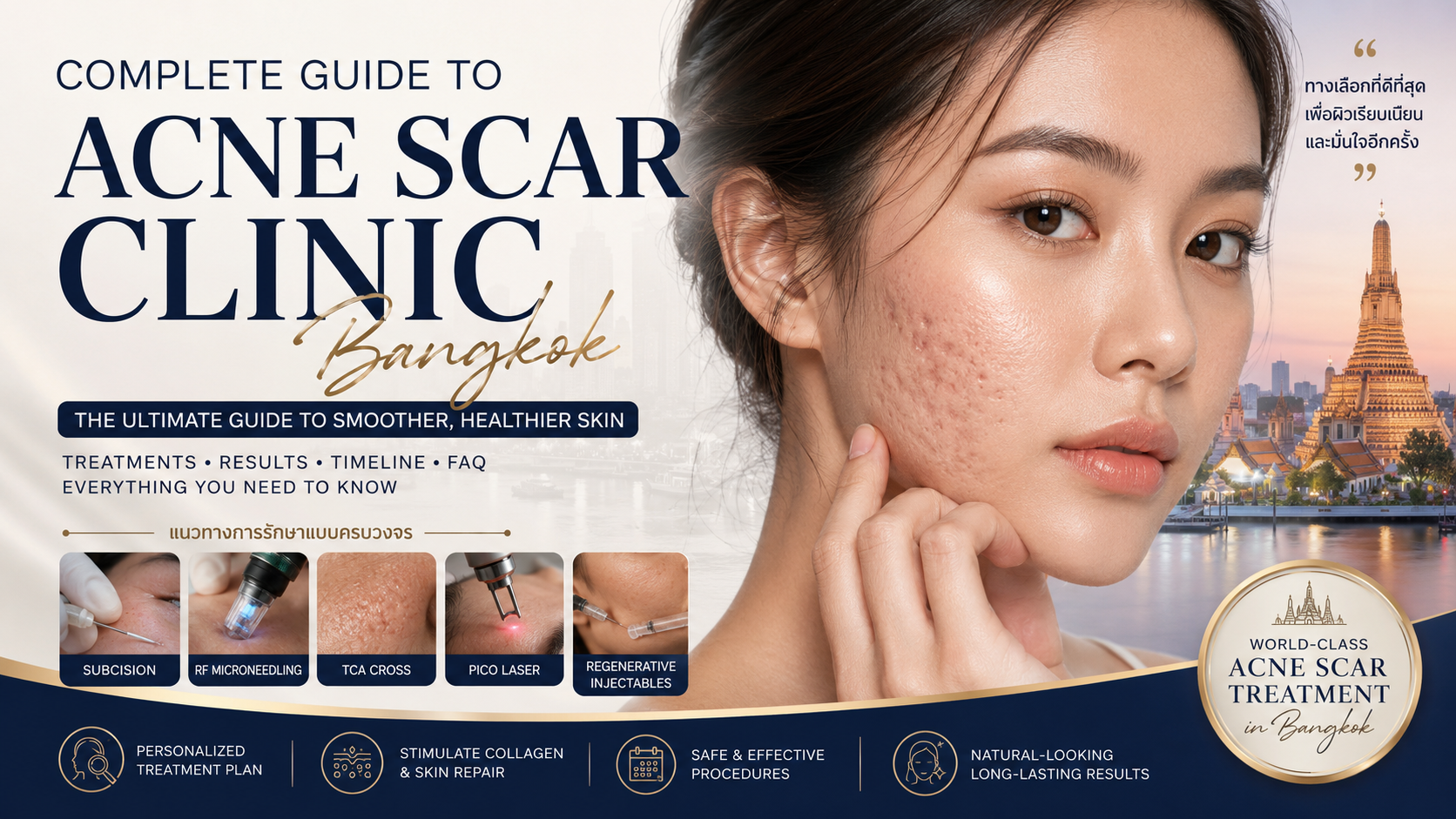
Acne Scar Clinic in Bangkok:The Complete Guide to Acne Scar Treatment
BAC Clinic (Bangkok Aesthetics Clinic), located in Sukhumvit 16, Bangkok, is a leading acne scar clinic in Bangkok specializing in personalized acne scar treatment and acne scar revision. We provide customized combination therapies using Subcision, RF Microneedling, TCA CROSS, Pico Laser, Rejuran S, and Juvelook to treat rolling scars, boxcar scars, and ice pick scars for natural-looking, long-lasting results.
Understanding Acne Scars
Before choosing any treatment, it’s important to understand what an acne scar actually is.
Many patients think acne scars are simply “holes in the skin.”
In reality, acne scars are structural injuries that affect multiple layers of the skin.
When severe acne causes inflammation, the body begins repairing damaged tissue.
Sometimes the healing process produces too much collagen.
Sometimes it produces too little.
Most acne scars treated at specialist clinics belong to the second category.
These are called atrophic acne scars.
Instead of producing enough collagen, the skin heals with a loss of underlying support, creating visible depressions.
This process affects:
- Collagen fibers
- Elastin fibers
- Dermal architecture
- Subcutaneous attachments
- Skin texture
Once mature scars develop, skincare products alone cannot rebuild these lost structures.
Professional procedures are required to stimulate new collagen formation and restore the skin’s structural integrity.
Why Some Acne Scars Never Improve on Their Own
A common misconception is that acne scars will naturally fade over time.
While post-inflammatory pigmentation may gradually lighten over months, true atrophic acne scars rarely disappear without treatment.
The reason lies beneath the surface.
Healthy skin contains a highly organized network of collagen fibers that provides strength and support.
During severe acne inflammation, this network becomes damaged.
Instead of regenerating perfectly, scar tissue forms.
This scar tissue differs from normal skin because it contains:
- Disorganized collagen bundles
- Fibrous bands tethering the skin downward
- Reduced dermal thickness
- Loss of subcutaneous volume
Without medical intervention, these structural changes usually remain permanent.
Fortunately, modern acne scar treatments are designed to remodel this scar tissue rather than simply masking it.
The Science Behind Modern Acne Scar Revision
Acne scar treatment has evolved dramatically over the last twenty years.
Older treatments relied almost entirely on ablative lasers that removed the skin’s surface.
While these lasers could improve texture, they often involved significant downtime and carried higher risks of pigmentation changes, especially in darker skin types.
Modern acne scar revision focuses on stimulating the body’s natural healing response.
Instead of aggressively removing skin, today’s treatments encourage controlled collagen remodeling.
This process includes:
- Breaking fibrotic scar bands
- Stimulating fibroblast activity
- Producing new collagen
- Increasing elastin production
- Restoring dermal thickness
- Improving skin elasticity
Because each technology targets different aspects of scar biology, combination therapy has become the international standard.
Why There Is No “Best” Acne Scar Treatment
One of the most common questions patients ask is:
“Which treatment is the best?”
The answer is surprisingly simple.
There isn’t one.
Every acne scar is different.
Even within the same patient, multiple scar types usually exist simultaneously.
For example, one individual may have:
- Rolling scars on the cheeks
- Ice pick scars near the temples
- Boxcar scars around the jawline
- Pigmentation across the forehead
Each scar type requires a different strategy.
Treating every scar with the same laser would likely produce disappointing results.
Instead, experienced acne scar specialists combine procedures to target each scar according to its biological characteristics.
This individualized approach explains why patients treated at dedicated acne scar clinics often achieve better outcomes than those receiving repeated laser sessions alone.
What Makes a Specialist Acne Scar Clinic Different?
Not every clinic advertising acne scar treatment truly specializes in acne scar revision.
A specialist acne scar clinic typically offers:
- Comprehensive scar assessment
- Multiple treatment technologies
- Combination therapy
- Personalized treatment planning
- Long-term follow-up
- Experience treating international patients
Rather than recommending the same procedure for every patient, the physician evaluates:
- Scar depth
- Scar width
- Scar distribution
- Skin thickness
- Previous treatments
- Downtime tolerance
- Budget
- Expected improvement
Only after this assessment is a customized treatment plan developed.
This personalized approach is one of the key reasons specialist clinics often produce more consistent long-term results.
Setting Realistic Expectations
Modern acne scar treatments can achieve remarkable improvements.
However, patients should understand one important principle:
Acne scar revision aims for improvement—not perfection.
Even with the most advanced treatments available today, completely restoring scarred skin to its original pre-acne condition is rarely possible.
The good news is that significant improvement is achievable.
Many patients notice:
- Smoother skin texture
- Shallower scars
- Improved collagen density
- Better light reflection
- Reduced shadowing
- More even skin tone
- Increased confidence
Improvement typically occurs gradually over several months as new collagen forms beneath the skin.
Because collagen remodeling continues long after each procedure, results often keep improving between treatment sessions.
Why Multiple Sessions Are Usually Necessary
Unlike injectable fillers that produce immediate volume, collagen stimulation takes time.
After procedures such as RF Microneedling, Subcision, TCA CROSS, or regenerative injectables, the body enters a healing phase.
Fibroblasts begin producing new collagen.
Existing collagen fibers reorganize.
Scar tissue gradually softens.
These biological processes cannot be rushed.
Most patients therefore require a series of treatments spaced several weeks apart to achieve optimal improvement.
The exact number of sessions depends on:
- Scar severity
- Scar type
- Age
- Healing capacity
- Previous treatments
- Treatment combination
- Individual collagen response
Rather than expecting dramatic improvement after one visit, successful acne scar revision should be viewed as a progressive treatment journey.
Understanding Acne Scar Types – Rolling, Boxcar, and Ice Pick Scars
One of the biggest misconceptions about acne scar treatment is the belief that all acne scars are the same.
Many patients search online for phrases such as “best laser for acne scars” or “best acne scar treatment in Bangkok“, expecting a single procedure to solve every problem.
In reality, this is rarely the case.
Acne scars are incredibly diverse. Two patients with similar-looking scars may require completely different treatment plans because the scars differ beneath the skin’s surface.
This is why experienced acne scar specialists spend a significant amount of time examining the skin before recommending treatment. Understanding the type of scar is the foundation of successful acne scar revision.
Acne Scars Are Three-Dimensional
Many people think of acne scars as simply “holes” in the skin.
From a medical perspective, they are much more complex.
Every acne scar has three important characteristics:
- Width
- Depth
- Attachment to underlying tissue
The surface appearance only tells part of the story.
Two scars may appear equally deep, but one may be firmly tethered to deeper tissue while another is simply missing collagen. These two scars require completely different treatments.
This explains why some patients undergo ten laser sessions with only modest improvement. The laser stimulates collagen, but if the scar remains mechanically tethered beneath the skin, the depression cannot lift properly.
Modern acne scar revision focuses on treating the cause—not just the appearance.
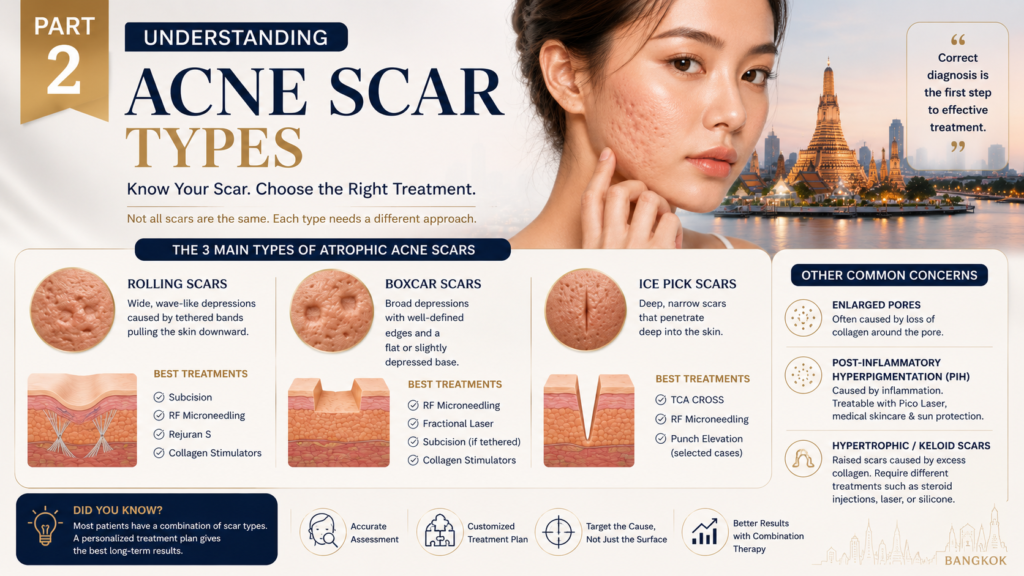
The Three Major Types of Atrophic Acne Scars
Most patients have one or more of the following scar types:
- Rolling scars
- Boxcar scars
- Ice pick scars
Many also have enlarged pores, post-inflammatory hyperpigmentation (PIH), redness, or uneven skin texture alongside these scars.
Recognizing each scar type is essential because each responds differently to treatment.
Rolling Scars
Rolling scars are among the most common acne scars seen in clinical practice.
What Do Rolling Scars Look Like?
Rolling scars create broad, wave-like depressions across the skin.
Instead of having sharp edges, they have smooth, sloping borders that make the skin appear uneven.
Under overhead lighting, rolling scars often become much more noticeable because they create shadows.
These scars are commonly found on:
- Cheeks
- Jawline
- Lower face
- Temples
They are particularly visible when smiling or moving facial muscles.
Why Do Rolling Scars Form?
Rolling scars develop because fibrous scar bands pull the skin downward.
Imagine stretching a bedsheet tightly across a mattress.
If someone ties a string from underneath the sheet down to the mattress, the sheet develops a depression.
This is exactly what happens beneath rolling scars.
Fibrous tissue anchors the skin to deeper structures, creating permanent depressions.
Even if collagen is stimulated, these tethering bands continue pulling the skin downward.
This is why collagen stimulation alone often produces limited improvement.
Best Treatments for Rolling Scars
Because tethering is the primary problem, treatment usually begins by releasing these fibrous bands.
The gold standard is:
Subcision
Subcision uses a specialized needle or blunt cannula inserted beneath the skin.
The physician carefully releases the scar bands, allowing the skin to elevate naturally.
Benefits include:
- Immediate release of tethering
- Stimulation of wound healing
- New collagen production
- Improved skin mobility
Many patients notice improvement immediately after swelling subsides, with continued enhancement over several months as collagen remodels.
RF Microneedling
After Subcision, RF Microneedling is commonly performed during the same session or at a later visit.
RF Microneedling:
- Tightens the dermis
- Stimulates collagen
- Improves elasticity
- Reduces surface irregularities
Together, these treatments address both the mechanical and biological components of rolling scars.
Rejuran S and Biostimulators
Some patients also benefit from regenerative injectables such as:
- Rejuran S
- Juvelook
- Hyaluronic acid fillers (selected cases)
These products can enhance collagen production and provide additional structural support beneath depressed scars.
Boxcar Scars
Boxcar scars are another common type of atrophic acne scar.
Unlike rolling scars, they have clearly defined edges.
Appearance
Boxcar scars resemble shallow craters.
They usually have:
- Flat bottoms
- Sharp vertical walls
- Circular or oval shape
The depth varies considerably.
Some are extremely shallow.
Others extend deep into the dermis.
Why Boxcar Scars Form
Boxcar scars develop after inflammatory acne destroys collagen in a localized area.
Unlike rolling scars, they are usually less tethered.
Instead, the skin simply lacks sufficient collagen support.
Because the edges remain sharply defined, treatment focuses on rebuilding collagen rather than releasing scar bands.
Shallow Boxcar Scars
Shallow scars often respond well to:
- RF Microneedling
- Fractional Laser
- Pico Fractional Laser
- Skin boosters
These treatments gradually stimulate collagen remodeling.
As collagen accumulates beneath the scar, the depression becomes less visible.
Deep Boxcar Scars
Deeper scars usually require more aggressive treatment.
Depending on the individual scar, physicians may recommend:
- Subcision
- RF Microneedling
- TCA CROSS
- Punch elevation
- Combination therapy
This illustrates why acne scar treatment cannot rely on one technology alone.
Even within the same scar category, treatment varies considerably.
Ice Pick Scars
Ice pick scars are generally considered the most difficult acne scars to treat.
Appearance
Ice pick scars are:
- Very narrow
- Deep
- Steep-sided
They resemble tiny puncture wounds extending deep into the skin.
Many are less than 2 mm wide but may penetrate deep into the dermis.
Because of their narrow opening, light enters the scar differently, making them appear darker than surrounding skin.
Why Lasers Often Struggle
Many patients undergo repeated laser treatments hoping to improve ice pick scars.
Unfortunately, lasers often cannot adequately reach the deepest portion of these scars.
Instead, they mainly affect the surrounding skin.
As a result, improvement may be limited.
TCA CROSS
Today, TCA CROSS is widely regarded as one of the most effective treatments for true ice pick scars.
The procedure involves placing a high concentration of trichloroacetic acid directly into each scar.
This controlled chemical injury stimulates:
- Collagen remodeling
- Scar wall thickening
- Progressive narrowing of the scar
Over multiple sessions, many ice pick scars become significantly shallower.
Mixed Acne Scars
Most patients do not have only one scar type.
Instead, they have a combination.
For example:
Cheeks:
- Rolling scars
- Boxcar scars
- Enlarged pores
Temples:
- Ice pick scars
Jawline:
- Rolling scars
Forehead:
- Pigmentation
This mixed presentation is one of the main reasons combination therapy has become the international standard.
Post-Inflammatory Hyperpigmentation (PIH)
Many patients mistake pigmentation for acne scars.
These are actually different conditions.
Pigmentation occurs because inflammation stimulates excess melanin production.
Unlike atrophic scars, pigmentation does not involve structural collagen loss.
It therefore responds to completely different treatments, including:
- Pico Laser
- Pigment-specific lasers
- Medical skincare
- Sun protection
Patients often experience dramatic improvement in pigmentation before structural scars improve.
Understanding this distinction helps set realistic expectations.
Enlarged Pores vs Acne Scars
Another common source of confusion is enlarged pores.
Large pores are not necessarily acne scars.
However, long-term acne can weaken collagen surrounding the pore opening.
This causes pores to stretch.
Treatments such as RF Microneedling and collagen stimulators often improve both enlarged pores and mild acne scars simultaneously.
Hypertrophic and Keloid Scars
Not all acne scars are depressed.
Some patients develop raised scars.
These include:
- Hypertrophic scars
- Keloids
Unlike atrophic scars, these occur because the body produces excessive collagen.
Treatment usually involves:
- Steroid injections
- Silicone therapy
- Laser treatment
- Cryotherapy (selected cases)
These scars require an entirely different treatment strategy from rolling, boxcar, or ice pick scars.
Why Correct Diagnosis Matters
Imagine three patients.
Patient A has tethered rolling scars.
Patient B has deep ice pick scars.
Patient C has pigmentation only.
If all three receive the exact same laser treatment, their outcomes will differ dramatically.
Patient A may improve only slightly because the tethering remains.
Patient B may see minimal improvement because the laser cannot adequately remodel the deep scar.
Patient C may experience excellent pigment improvement but still have visible textural irregularities if structural scars are also present.
This is why accurate diagnosis is the cornerstone of successful acne scar treatment.
Combination Scars Require Combination Treatments
Modern acne scar specialists rarely rely on a single procedure.
Instead, treatment plans often combine multiple modalities to address different scar characteristics simultaneously.
For example:
Rolling Scars
- Subcision
- RF Microneedling
- Rejuran S
Deep Boxcar Scars
- Subcision (selected cases)
- RF Microneedling
- Collagen stimulators
Ice Pick Scars
- TCA CROSS
- RF Microneedling for surrounding texture
Pigmentation
- Pico Laser
- Medical skincare
Rather than asking, “Which treatment is the best?” a better question is:
“Which combination of treatments is best for my specific scar pattern?”
That shift in perspective often marks the beginning of a more effective treatment journey.
The Importance of Personalized Assessment
No two patients heal in exactly the same way.
A personalized consultation should evaluate:
- Scar morphology
- Skin type
- Ethnicity
- Previous treatments
- Tendency for pigmentation
- Lifestyle
- Downtime tolerance
- Budget
- Treatment goals
Only after this assessment can a tailored treatment plan be developed.
The goal is not simply to perform procedures, but to select the right procedure, at the right depth, in the right sequence, for the right patient.
The Best Acne Scar Treatments in Bangkok – Complete Medical Guide
Now that we’ve covered the different types of acne scars, the next question naturally becomes:
Which acne scar treatment actually works?
The answer is more complex than simply choosing the newest laser or the most expensive procedure.
Modern acne scar revision is based on understanding scar biology, collagen remodeling, and personalized combination therapy. The goal is not to “erase” scars overnight, but to progressively rebuild the skin’s structure over time.
In this chapter, we’ll explore the most commonly used acne scar treatments in specialist clinics and explain how each one works, who it is best suited for, and how it fits into a comprehensive treatment plan.
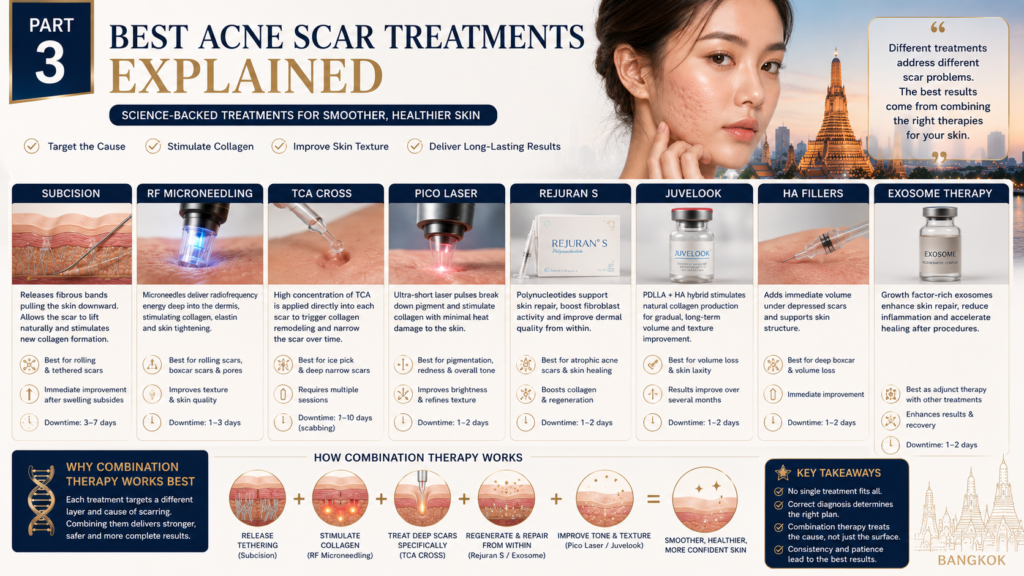
Subcision – The Gold Standard for Rolling Acne Scars
Among all acne scar procedures, Subcision is widely regarded as one of the most important treatments for tethered rolling scars.
Unlike lasers that work from the skin’s surface, Subcision treats the problem from underneath.
What Is Subcision?
Subcision is a minor surgical procedure in which a specialized needle or blunt cannula is inserted beneath the skin. The physician carefully moves the instrument through the scarred tissue to release the fibrous bands that tether the skin downward.
These scar bands act like tiny anchors. As long as they remain attached, the skin cannot return to a smoother position, no matter how much collagen is produced.
By releasing these bands, Subcision immediately improves skin mobility and creates space beneath the scar where new collagen can develop during healing.
How Does Subcision Improve Acne Scars?
Subcision works through two complementary mechanisms.
1. Mechanical Release
The fibrous attachments pulling the skin downward are physically separated.
This allows the depressed scar to elevate naturally.
2. Biological Stimulation
The controlled injury caused by the procedure activates the body’s wound-healing response.
This stimulates:
- Fibroblast activation
- New collagen formation
- New blood vessel development
- Dermal remodeling
Because collagen continues to form for several months after treatment, improvement is gradual and progressive.
Which Scars Respond Best?
Subcision is particularly effective for:
- Rolling scars
- Tethered boxcar scars
- Broad depressed scars
- Areas with skin adhesion
It is generally less effective for isolated ice pick scars, which require different treatment approaches.
Cannula vs Needle Subcision
Specialists may use different instruments depending on the scar pattern.
Blunt Cannula
Advantages include:
- Reduced bruising
- Lower risk of vascular injury
- Better treatment of broad scar fields
- Greater patient comfort
Nokor Needle
Advantages include:
- Excellent for dense fibrotic scars
- Greater cutting ability
- Precise release of stubborn tethering
Many experienced physicians use both techniques depending on the patient’s anatomy and scar characteristics.
Recovery After Subcision
Most patients experience:
- Mild swelling
- Bruising
- Tenderness
- Temporary firmness beneath the skin
These effects usually improve within one to two weeks, although healing varies between individuals.
Because collagen remodeling continues for months, final improvement develops gradually rather than immediately.
RF Microneedling – Stimulating Deep Collagen Remodeling
If Subcision releases scar tethering, RF Microneedling rebuilds the skin’s internal support structure.
This treatment has become one of the most valuable tools in acne scar revision because it combines controlled mechanical injury with radiofrequency energy.
How RF Microneedling Works
Ultra-fine insulated needles penetrate the skin to predetermined depths.
Once the needles reach the target layer, radiofrequency energy is delivered directly into the dermis.
This creates controlled zones of thermal injury while leaving much of the skin surface intact.
The body responds by producing:
- Type I collagen
- Type III collagen
- Elastin
- Hyaluronic acid
- New connective tissue
Over time, this remodeling thickens the dermis and improves the appearance of depressed scars.
Why Depth Matters
One of the major advantages of RF Microneedling is adjustable needle depth.
Different areas of the face have different skin thickness.
For example:
- Forehead: thinner skin
- Temples: delicate tissue
- Cheeks: thicker dermis
- Jawline: variable depth
An experienced physician adjusts treatment depth according to the anatomy of each area, allowing more targeted collagen stimulation.
Which Scars Respond Best?
RF Microneedling is particularly useful for:
- Rolling scars
- Shallow boxcar scars
- Enlarged pores
- Uneven skin texture
- Mild skin laxity
It is often combined with Subcision because the two treatments address different aspects of scar formation.
Advantages Over Traditional Ablative Lasers
Compared with older fully ablative lasers, RF Microneedling generally offers:
- Less downtime
- Lower risk of post-inflammatory hyperpigmentation
- Greater safety for darker skin types
- Adjustable treatment depth
- Minimal surface damage
These characteristics make it especially attractive for patients with Asian skin.
TCA CROSS – The Preferred Treatment for Ice Pick Scars
Ice pick scars remain among the most challenging acne scars to treat.
Because they are extremely narrow and deep, many energy-based devices cannot adequately remodel the deepest portion of the scar.
This is where TCA CROSS plays a unique role.
What Is TCA CROSS?
TCA CROSS stands for Chemical Reconstruction Of Skin Scars.
Instead of treating the entire face, a high concentration of trichloroacetic acid is carefully placed into each individual scar.
This creates a controlled chemical injury confined to the scar itself.
The healing response stimulates new collagen formation and gradually narrows the scar opening.
Treatment Timeline
Patients typically undergo several sessions spaced weeks apart.
After each treatment:
- A small white frosting appears
- A protective scab develops
- The scab falls off naturally
- Collagen remodeling continues beneath the surface
With repeated sessions, many ice pick scars become shallower and less noticeable.
Who Benefits Most?
TCA CROSS is especially effective for:
- Ice pick scars
- Narrow deep boxcar scars
- Small isolated atrophic scars
It is often combined with RF Microneedling to improve surrounding skin texture.
Pico Laser – Improving Pigmentation and Skin Quality
Many patients assume Pico Laser is the best treatment for all acne scars.
In reality, Pico technology is excellent for certain concerns but has limitations.
What Pico Laser Does Best
Pico lasers deliver extremely short pulses of laser energy.
These pulses create photoacoustic effects that fragment pigment while minimizing thermal injury.
As a result, Pico Laser is highly effective for:
- Post-inflammatory hyperpigmentation
- Sun spots
- Freckles
- Overall skin brightness
- Mild textural refinement
Can Pico Laser Improve Acne Scars?
Yes—but primarily as part of a combination treatment plan.
Pico Laser may improve:
- Surface texture
- Pigmentation
- Skin tone
- Mild collagen stimulation
However, Pico Laser cannot release fibrous scar bands beneath the skin.
For patients with significant rolling scars, additional procedures such as Subcision are often required.
Rejuran S – Supporting Dermal Repair
One of the most exciting developments in regenerative aesthetics is the use of polynucleotide-based injectables.
Rejuran S was specifically developed for depressed acne scars.
How Rejuran S Works
Rather than acting as a traditional filler, Rejuran S encourages the skin to repair itself.
Polynucleotides support:
- Fibroblast activity
- Collagen production
- Tissue regeneration
- Improved dermal quality
Because it stimulates natural healing, results appear gradually.
Best Candidates
Rejuran S is commonly used for:
- Localized depressed scars
- Atrophic acne scars
- Combination treatment with Subcision
- RF Microneedling enhancement
It is particularly valuable for patients seeking regenerative rather than purely volumizing treatments.
Juvelook – Collagen Biostimulation
Juvelook combines PDLLA (Poly-D,L-lactic acid) with Hyaluronic Acid.
Unlike traditional fillers that mainly replace lost volume, Juvelook acts as a collagen biostimulator.
Mechanism of Action
The hyaluronic acid provides initial hydration and support.
The PDLLA particles gradually stimulate fibroblasts to produce new collagen over time.
This makes Juvelook particularly attractive for:
- Diffuse atrophic scars
- Skin texture improvement
- Long-term collagen remodeling
Results typically continue improving for several months after treatment.
Hyaluronic Acid Fillers
Some acne scars involve true volume loss.
In selected patients, hyaluronic acid fillers may be used beneath individual scars.
These fillers provide immediate structural support while improving the contour of depressed areas.
However, fillers do not release tethered scars or stimulate collagen to the same extent as Subcision or RF Microneedling.
For this reason, they are usually considered adjunctive rather than primary treatments.
Exosome Therapy
Exosomes are extracellular vesicles that contain signaling molecules involved in tissue repair.
Although research continues to evolve, exosomes are increasingly used as supportive treatments following procedures such as:
- RF Microneedling
- Laser resurfacing
- Subcision
Their proposed benefits include:
- Reduced inflammation
- Faster recovery
- Enhanced wound healing
- Improved collagen remodeling
Exosome therapy is generally considered an adjunct rather than a standalone acne scar treatment.
Why Combination Therapy Produces Better Results
No single treatment addresses every component of acne scarring.
Each modality targets a different biological process.
| Treatment | Primary Target |
|---|---|
| Subcision | Fibrous tethering |
| RF Microneedling | Collagen remodeling |
| TCA CROSS | Deep narrow scars |
| Pico Laser | Pigmentation & skin quality |
| Rejuran S | Tissue regeneration |
| Juvelook | Long-term collagen stimulation |
| HA Fillers | Volume replacement |
When these procedures are combined thoughtfully, they complement each other rather than compete.
For example:
A patient with mixed scars may receive:
- Subcision to release tethering
- RF Microneedling to stimulate collagen
- TCA CROSS for ice pick scars
- Pico Laser for pigmentation
- Rejuran S for dermal regeneration
This comprehensive strategy often produces more balanced and natural-looking improvement than repeating a single treatment multiple times.
Why Treatment Order Matters
The sequence of procedures is almost as important as the procedures themselves.
For example:
If a rolling scar remains tethered, performing repeated collagen stimulation before releasing the scar may yield only modest improvement.
Similarly, treating pigmentation before structural scars may improve skin tone while leaving the texture unchanged.
Experienced acne scar specialists therefore design treatment plans that follow the biology of wound healing.
Each procedure prepares the skin for the next stage of improvement.
Safety and Individualization
Every treatment has potential risks, including:
- Temporary redness
- Swelling
- Bruising
- Post-inflammatory pigmentation
- Infection (rare)
- Temporary irregularities
A thorough consultation helps determine the safest treatment plan based on:
- Skin type
- Scar severity
- Medical history
- Previous treatments
- Lifestyle
- Downtime expectations
The safest and most effective approach is always one that is personalized rather than standardized.
Personalized Acne Scar Treatment Plans – Why Every Patient Needs a Different Strategy
One of the biggest reasons patients become disappointed with acne scar treatments is not because the technology failed—it is because the treatment plan was never individualized.
Many patients arrive at a clinic asking for a specific procedure.
“I want CO2 Laser.”
“I heard Pico Laser is the best.”
“Can I just have Subcision?”
While these are reasonable questions, experienced acne scar specialists usually think differently.
Instead of asking:
“Which treatment does the patient want?”
They ask:
“Why does this scar exist, and what biological process needs to be corrected?”
That difference in mindset often separates average results from outstanding long-term outcomes.
Modern acne scar revision is not about selling individual procedures—it is about solving structural problems beneath the skin.
Every Face Is Different
Even identical twins rarely develop identical acne scars.
Several factors influence scar formation, including:
- Genetics
- Acne severity
- Duration of inflammation
- Picking or squeezing pimples
- Hormonal influences
- Skin thickness
- Healing response
- Previous treatments
- Age
- Sun exposure
As a result, no two treatment plans should be exactly alike.
An individualized assessment considers both the visible scars and the biological processes responsible for them.
Step One: Comprehensive Scar Analysis
The first consultation is one of the most important parts of the treatment journey.
Rather than immediately recommending a laser, an experienced physician carefully evaluates the skin under different lighting conditions.
This assessment typically includes:
Scar Type
The physician determines whether the scars are:
- Rolling
- Boxcar
- Ice pick
- Mixed
- Hypertrophic
- Keloid
Most patients have a combination of several scar types.
Scar Depth
Depth influences treatment choice.
For example:
- Superficial scars may respond well to collagen stimulation.
- Deep scars often require Subcision or TCA CROSS before collagen remodeling becomes effective.
Scar Distribution
The physician also examines where the scars are located.
Common patterns include:
Cheeks
Usually contain:
- Rolling scars
- Boxcar scars
- Enlarged pores
Temples
Often contain:
- Ice pick scars
- Narrow boxcar scars
Jawline
Frequently develops:
- Rolling scars
- Tethered scars
Forehead
Common findings include:
- Enlarged pores
- Mild boxcar scars
- Pigmentation
Each area of the face may require a different treatment strategy.
Step Two: Evaluating Skin Quality
Scar treatment is about more than treating individual depressions.
Overall skin quality also influences the final cosmetic outcome.
During assessment, physicians evaluate:
- Collagen density
- Skin elasticity
- Oil production
- Pore size
- Pigmentation
- Redness
- Hydration
- Skin thickness
Improving these factors often enhances overall facial appearance even before individual scars become significantly shallower.
Step Three: Previous Treatment History
Understanding what has already been done is essential.
Common previous treatments include:
- Fractional CO₂ Laser
- Fraxel
- Pico Laser
- Microneedling
- PRP
- Dermal fillers
- RF Microneedling
- Chemical peels
- Subcision
A patient who has undergone twenty laser sessions without Subcision may require an entirely different approach than someone receiving treatment for the first time.
Likewise, previous procedures may influence how aggressively future treatments should be performed.
Step Four: Understanding the Patient’s Goals
Every patient has different expectations.
Some want dramatic improvement regardless of downtime.
Others prefer gradual improvement with minimal interruption to work or travel.
Common goals include:
- Smoother cheeks
- Better appearance under natural light
- Reduced makeup use
- Improvement before a wedding
- Treatment during a holiday in Bangkok
- Faster recovery
- Long-term collagen regeneration
The treatment plan should align with these priorities.
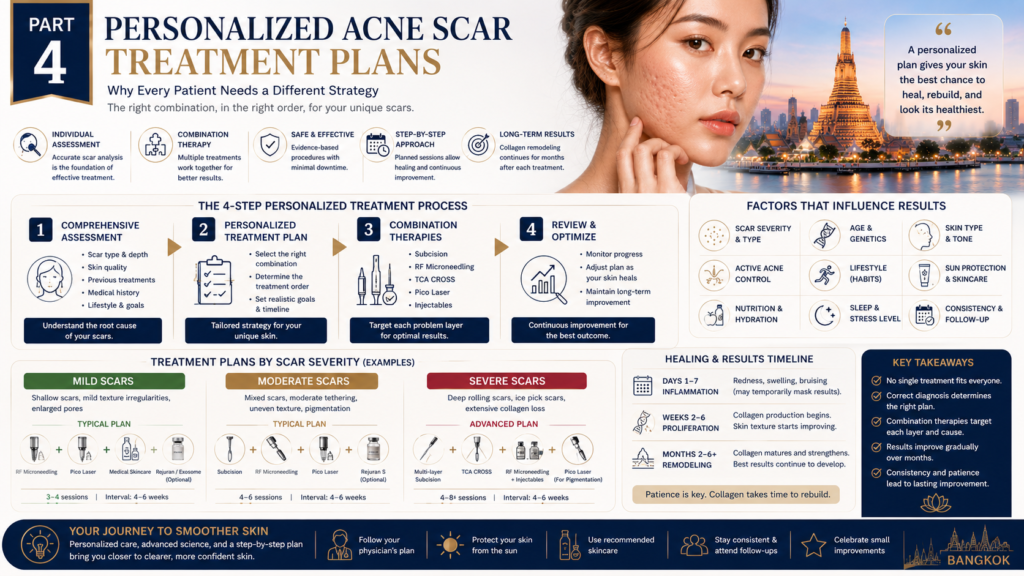
Mild Acne Scars: Typical Treatment Strategy
Patients with mild acne scarring usually present with:
- Small rolling scars
- Shallow boxcar scars
- Enlarged pores
- Mild pigmentation
A personalized treatment plan may include:
- RF Microneedling
- Pico Laser
- Medical skincare
- Regenerative injectables when appropriate
The primary objective is collagen stimulation while improving overall skin texture.
Moderate Acne Scars: Typical Treatment Strategy
Moderate acne scars often involve:
- Rolling scars
- Mixed boxcar scars
- Pigmentation
- Enlarged pores
- Early skin tethering
These patients frequently benefit from combination therapy.
A typical sequence might include:
Session 1
- Subcision
- Rejuran S (selected scars)
Session 2
- RF Microneedling
Session 3
- Pico Laser
Session 4
- RF Microneedling
The exact sequence varies according to the physician’s assessment and the patient’s healing response.
Severe Acne Scars: Typical Treatment Strategy
Patients with severe acne scars often present with:
- Extensive tethering
- Deep rolling scars
- Multiple ice pick scars
- Diffuse boxcar scars
- Significant collagen loss
Rather than attempting aggressive treatment in a single visit, physicians typically develop a staged treatment plan over several months.
This may involve:
- Multi-layer Subcision
- TCA CROSS
- RF Microneedling
- Rejuran S
- Juvelook
- Pico Laser
- Hyaluronic Acid fillers (selected cases)
The objective is progressive improvement while minimizing unnecessary risks.
Why Combination Therapy Is the New Gold Standard
Years ago, many clinics relied almost exclusively on ablative laser resurfacing.
While laser technology remains valuable, clinicians now recognize that acne scars arise from multiple underlying problems, including:
- Fibrous tethering
- Loss of collagen
- Dermal thinning
- Pigmentation
- Volume loss
- Skin texture changes
No single treatment can correct all of these simultaneously.
By combining complementary procedures, physicians can target several mechanisms during the course of treatment.
Example Treatment Pathway
Consider a patient with:
- Rolling scars on both cheeks
- Ice pick scars near the temples
- Mild pigmentation
- Enlarged pores
Instead of repeating one laser six times, a specialist may recommend:
First Visit
- Comprehensive consultation
- Clinical photography
- Scar mapping
- Subcision for tethered rolling scars
Second Visit (4–6 Weeks Later)
- RF Microneedling
- Regenerative injectable for selected scars
Third Visit
- TCA CROSS for ice pick scars
- Pico Laser for pigmentation
Fourth Visit
- RF Microneedling
- Reassessment of collagen remodeling
As healing progresses, the physician continually adjusts the plan based on the patient’s response.
This flexibility is one of the defining features of specialist acne scar care.
Monitoring Progress
Improvement should not be judged immediately after treatment.
Early swelling may temporarily make scars appear smoother, while initial inflammation can also make the skin look worse before healing begins.
Many clinics therefore recommend standardized photography taken:
- Before treatment
- Every few sessions
- Under identical lighting
- At consistent facial angles
Objective comparison helps both the physician and the patient appreciate gradual improvements that may otherwise go unnoticed.
Recovery Timeline
Although each treatment has its own recovery profile, a typical combination program may involve:
First Few Days
- Mild redness
- Swelling
- Tenderness
- Occasional bruising after Subcision
First Two Weeks
- Resolution of inflammation
- Early collagen activation
Weeks 4–8
- Progressive collagen remodeling
- Improved skin texture
- Reduced scar depth
Months 3–6
- Continued collagen maturation
- Increased dermal thickness
- Further softening of scar edges
Because collagen remodeling is a biological process, patience is essential.
Factors That Influence Results
Not every patient responds identically.
Several variables affect treatment outcomes.
Age
Younger patients often heal more rapidly, although meaningful improvement is possible across many age groups.
Skin Type
Darker skin types require careful treatment planning to reduce the risk of post-inflammatory pigmentation.
Smoking
Smoking may impair wound healing and collagen production, potentially reducing treatment effectiveness.
Active Acne
Persistent inflammatory acne should ideally be controlled before extensive scar revision begins.
Treating new acne while simultaneously repairing old scars can compromise long-term results.
General Health
Nutrition, sleep quality, stress levels, and underlying medical conditions all contribute to tissue healing.
Setting Realistic Expectations
One of the most important responsibilities of an acne scar specialist is setting realistic expectations.
Patients should understand that:
- Improvement is gradual.
- Multiple sessions are usually required.
- Different scar types improve at different rates.
- Some scars respond better than others.
- Perfect skin is rarely achievable.
However, significant improvement in texture, contour, and overall skin quality is often possible when treatment is individualized and performed consistently.
For many patients, the greatest benefit is not simply smoother skin—it is renewed confidence in daily life.
Why Experience Matters
Advanced devices alone do not guarantee excellent results.
Successful acne scar revision depends on:
- Accurate scar diagnosis
- Appropriate procedure selection
- Technical skill
- Knowledge of facial anatomy
- Understanding wound healing
- Careful treatment sequencing
- Long-term follow-up
For this reason, choosing a clinic that regularly treats acne scars—and not just general cosmetic concerns—can make a meaningful difference in both safety and outcomes.
Questions to Ask Before Choosing an Acne Scar Clinic
Before committing to treatment, consider asking:
- Does the clinic offer multiple treatment modalities?
- Is the treatment plan personalized?
- Will my scar type be mapped before treatment?
- How many sessions are likely to be required?
- What degree of improvement is realistic?
- What downtime should I expect?
- Are before-and-after photographs available for similar scar types?
- Will the treatment plan be adjusted as my skin heals?
A thorough consultation should leave you with a clear understanding of both the process and the expected timeline.
The Importance of Long-Term Follow-Up
Acne scar treatment does not end when the procedure is finished.
Regular follow-up appointments allow the physician to:
- Monitor collagen remodeling
- Assess scar response
- Adjust future treatment depth
- Introduce additional modalities when appropriate
- Manage pigmentation or prolonged redness if necessary
Long-term planning often produces more natural and predictable outcomes than isolated one-time treatments.
What Results Can You Expect? Recovery Timeline, Before & After, and Common Myths About Acne Scar Treatment
One of the first questions almost every patient asks during an acne scar consultation is:
“How much improvement can I realistically expect?”
It’s an understandable question—but one that doesn’t have a simple numerical answer.
Some clinics advertise dramatic promises such as:
- “100% scar removal”
- “Permanent results after one treatment”
- “Perfect skin again”
While these claims may sound appealing, they are not supported by how acne scars actually heal.
Modern acne scar revision is based on progressive collagen remodeling, individualized treatment, and realistic expectations. Patients who understand this process are generally more satisfied because they recognize that improvement occurs gradually over time—not overnight.
In this chapter, we’ll discuss what you can realistically expect from acne scar treatment, how long collagen remodeling takes, typical recovery timelines, and common misconceptions that often lead to disappointment.
Can Acne Scars Be Completely Removed?
This is perhaps the most frequently asked question.
The honest answer is:
In most cases, no.
Established atrophic acne scars involve permanent structural changes in the skin. Even with today’s most advanced technologies, it is usually not possible to restore the skin to its exact pre-acne state.
However, significant improvement is often achievable.
The objective of treatment is to:
- Reduce scar depth
- Improve skin smoothness
- Increase collagen density
- Improve skin texture
- Reduce shadowing
- Improve overall skin quality
For many patients, this translates into skin that looks substantially smoother in everyday lighting, even though close inspection may still reveal some residual scarring.
The goal is improvement that looks natural—not perfection.
Understanding the Biology of Improvement
To appreciate why acne scar treatment takes time, it helps to understand what happens beneath the skin after each procedure.
Unlike fillers, which provide immediate volume, most acne scar treatments stimulate the body’s own repair mechanisms.
Following procedures such as:
- Subcision
- RF Microneedling
- TCA CROSS
- Rejuran S
- Juvelook
the body enters a controlled healing process.
This process typically involves:
Phase 1: Inflammation (Days 1–7)
Immediately after treatment, the body begins repairing the controlled injury.
Patients may notice:
- Redness
- Mild swelling
- Bruising (especially after Subcision)
- Tenderness
Although the skin may temporarily appear smoother because of swelling, this is not the final result.
Phase 2: Proliferation (Weeks 2–6)
Fibroblasts become highly active.
During this stage:
- New collagen begins forming.
- New blood vessels develop.
- Damaged tissue starts reorganizing.
Patients often notice gradual improvements in texture during this period.
Phase 3: Remodeling (Months 2–6)
The newly formed collagen continues to mature.
Fibers become:
- Stronger
- Better organized
- More supportive
This stage often produces the most meaningful improvements in scar appearance.
Importantly, collagen remodeling may continue for several months after a single treatment session.
Why Results Continue Improving
One misconception is that treatment is finished once the redness disappears.
In reality, much of the improvement occurs after visible healing has ended.
For example:
A patient who undergoes RF Microneedling today may continue producing new collagen for several months.
Similarly, after Subcision, the released tissue gradually reorganizes and fills with newly formed collagen.
This explains why physicians usually schedule treatments several weeks apart rather than every few days.
The skin needs time to complete each stage of biological healing before the next procedure is performed.
Expected Improvement by Scar Severity
Although every patient heals differently, the extent of improvement often depends on the severity and type of acne scars.
Mild Acne Scars
Patients with:
- Small rolling scars
- Shallow boxcar scars
- Mild texture irregularities
often notice:
- Smoother skin
- Smaller pores
- Improved skin tone
- Better light reflection
Because collagen loss is relatively limited, mild scars may respond more quickly to treatment.
Moderate Acne Scars
Patients with:
- Mixed scar types
- Moderate tethering
- Uneven texture
typically experience progressive improvement over several treatment sessions.
As collagen accumulates and scar bands are released, facial contours often become noticeably smoother.
Severe Acne Scars
Patients with:
- Extensive rolling scars
- Deep boxcar scars
- Numerous ice pick scars
- Significant collagen loss
usually require a longer treatment journey.
Improvement is still possible, but multiple procedures performed over several months are often necessary.
Patience and consistency are particularly important in these cases.
Treatment Timelines
The exact treatment schedule varies according to the physician’s recommendations.
A typical treatment journey may look like this:
Month 1
- Initial consultation
- Scar mapping
- First treatment (often Subcision)
Month 2
- RF Microneedling
- Regenerative injectable (when indicated)
Month 3
- TCA CROSS for deep scars
- Pico Laser for pigmentation
Month 4
- RF Microneedling
- Reassessment
Month 5–6
- Additional targeted treatments as needed
This staged approach allows collagen remodeling to occur between sessions while giving the physician opportunities to refine the treatment plan.
Recovery After Each Procedure
Recovery depends on the treatment performed.
Subcision
Typical recovery includes:
- Swelling
- Bruising
- Mild tenderness
Bruising may last longer in some patients, particularly after extensive release of fibrous scar bands.
RF Microneedling
Patients often experience:
- Mild redness
- Temporary swelling
- Fine pinpoint marks
These changes generally improve over several days.
TCA CROSS
After treatment:
- Small white frosting appears
- Tiny scabs develop
- Scabs naturally fall away
Picking or removing the scabs prematurely should be avoided, as this may interfere with healing.
Pico Laser
Recovery is usually relatively quick.
Patients may notice:
- Mild redness
- Temporary warmth
- Slight dryness
Pigmented lesions often gradually fade over the following weeks.
Before-and-After Photography
Professional photography plays an important role in acne scar treatment.
Many patients struggle to appreciate gradual improvements because they see their own skin every day.
Standardized photographs help document:
- Scar depth
- Skin texture
- Pigmentation
- Pore size
- Overall skin quality
For meaningful comparison, photographs should ideally be taken:
- Under identical lighting
- At the same camera angle
- Without makeup
- Before each major treatment stage
This provides a more objective assessment of progress.
Why Some Scars Improve Faster Than Others
Different scar types respond at different rates.
For example:
Rolling Scars
May improve relatively quickly once tethering is released.
Boxcar Scars
Often require progressive collagen remodeling over multiple sessions.
Ice Pick Scars
Usually respond more slowly because of their depth and narrow shape.
Several TCA CROSS sessions are commonly required.
Patients should therefore avoid comparing one scar type with another.
Each follows its own healing timeline.
Can Acne Scars Return?
True acne scars generally do not “come back” after successful treatment.
However, new acne can create new scars.
This is why controlling active acne remains an essential part of long-term management.
Maintaining healthy skin with appropriate skincare and medical treatment helps protect the results achieved through scar revision.
Common Myths About Acne Scar Treatment
The internet contains a great deal of misinformation about acne scars.
Let’s examine some of the most common myths.
Myth 1: One Laser Can Fix Every Scar
Reality:
Different scar types require different treatments.
Lasers alone cannot release tethered scars or effectively treat every type of acne scar.
Myth 2: More Aggressive Treatment Always Means Better Results
Reality:
Excessively aggressive treatment may increase:
- Downtime
- Pigmentation
- Inflammation
- Risk of complications
The most effective treatment is not necessarily the strongest—it is the most appropriate.
Myth 3: Results Should Be Immediate
Reality:
Collagen remodeling requires time.
Improvement usually develops gradually over weeks and months.
Myth 4: Younger Patients Are the Only Ones Who Benefit
Reality:
Although younger skin often heals more quickly, meaningful improvement is possible in many adults.
Age influences healing speed but does not necessarily determine whether treatment is worthwhile.
Myth 5: Acne Scar Creams Can Repair Deep Scars
Reality:
Medical skincare supports skin health but cannot rebuild deep structural collagen loss on its own.
Established atrophic scars generally require procedural treatment.
Lifestyle Factors That Influence Healing
Several everyday habits can influence treatment outcomes.
Sun Protection
Excessive ultraviolet exposure increases the risk of pigmentation and may interfere with optimal healing.
Daily sunscreen use is strongly recommended.
Nutrition
A balanced diet containing adequate protein, vitamins, and minerals supports collagen production and tissue repair.
Sleep
Most tissue repair occurs during sleep.
Good sleep quality may contribute to more effective healing.
Smoking
Smoking reduces blood flow and oxygen delivery to tissues, which may impair collagen production and slow wound healing.
Patients who smoke should discuss this with their physician before beginning treatment.
The Emotional Side of Acne Scars
Acne scars affect more than the skin.
Many patients describe:
- Reduced self-confidence
- Anxiety during social interactions
- Reluctance to appear in photographs
- Difficulty speaking in bright lighting
- Frustration after unsuccessful previous treatments
These feelings are common and understandable.
For many individuals, successful acne scar treatment is not simply about smoother skin—it is about feeling more comfortable and confident in everyday life.
Why Patience Is Essential
Acne scar revision should be viewed as a long-term investment rather than a single event.
Patients who understand the biology of collagen remodeling often feel more confident throughout the process because they recognize that improvement continues well beyond the initial recovery period.
Each treatment builds upon the previous one.
Over time, these incremental improvements can produce meaningful changes in skin texture, contour, and overall appearance.
A Partnership Between Patient and Physician
The best outcomes occur when treatment becomes a collaboration.
The physician contributes:
- Accurate diagnosis
- Technical expertise
- Personalized planning
- Safe treatment sequencing
The patient contributes:
- Realistic expectations
- Consistent follow-up
- Proper skincare
- Sun protection
- Patience during healing
Together, these factors maximize the likelihood of achieving meaningful, long-term improvement.
How to Choose the Best Acne Scar Clinic in Bangkok – Complete FAQ & Final Guide
After reading this guide, one question remains:
How do you choose the right acne scar clinic in Bangkok?
Bangkok is home to hundreds of aesthetic clinics. While many advertise acne scar treatments, only a small number focus on comprehensive acne scar revision using multiple treatment modalities.
Choosing the right clinic is one of the most important decisions you will make because the physician’s assessment, treatment strategy, and long-term planning often have a greater impact on your results than any single device.
In this final chapter, we’ll discuss what to look for when selecting an acne scar clinic, what international patients should know before traveling to Thailand, and answer the questions most frequently asked during consultations.
What Makes an Excellent Acne Scar Clinic?
The best acne scar clinics share several important characteristics.
1. Comprehensive Scar Assessment
A quality consultation should never begin with:
“Which package would you like?”
Instead, the physician should first evaluate:
- Scar type
- Scar depth
- Scar distribution
- Skin thickness
- Active acne
- Pigmentation
- Previous treatments
- Lifestyle factors
- Recovery expectations
Only after this assessment should treatment recommendations be made.
2. Multiple Treatment Options
If every patient receives the same procedure regardless of scar type, that should raise questions.
A specialist acne scar clinic should offer multiple evidence-based treatment options, such as:
- Subcision
- RF Microneedling
- TCA CROSS
- Pico Laser
- Regenerative injectables
- Biostimulators
- Hyaluronic acid fillers (selected cases)
Having access to several modalities allows the physician to build a treatment plan tailored to the individual rather than fitting the patient to the technology.
3. Personalized Combination Therapy
Modern acne scar treatment is no longer about finding the “best laser.”
Instead, specialists combine different procedures according to the biology of each scar.
Examples include:
Rolling Scars
- Subcision
- RF Microneedling
- Rejuran S
Ice Pick Scars
- TCA CROSS
- RF Microneedling for surrounding texture
Pigmentation
- Pico Laser
- Medical skincare
Each treatment addresses a different component of the scarring process.
4. Realistic Expectations
An experienced physician should explain:
- What can improve
- What cannot be completely corrected
- How many sessions may be required
- Recovery expectations
- Possible risks
- Long-term maintenance
Promises of “100% scar removal” should be approached with caution.
Why Experience Matters More Than Technology
Every year, new lasers and energy-based devices enter the market.
While technological advances are valuable, excellent outcomes depend primarily on:
- Accurate diagnosis
- Technical skill
- Knowledge of facial anatomy
- Understanding wound healing
- Appropriate treatment sequencing
- Continuous reassessment
The device is a tool.
The physician determines how effectively that tool is used.
Preparing for Your Consultation
Bringing the right information to your consultation helps your physician develop a more personalized treatment plan.
Useful information includes:
- Previous acne treatments
- Previous scar procedures
- Current medications
- History of isotretinoin use
- Allergies
- Previous laser treatments
- History of pigmentation problems
- Tendency to form keloids
- Current skincare routine
This information allows the physician to recommend the safest and most effective treatment strategy.
Advice for International Patients
Bangkok has become one of Asia’s leading destinations for acne scar treatment.
Patients frequently travel from:
- Australia
- New Zealand
- Singapore
- Malaysia
- Indonesia
- Hong Kong
- United Kingdom
- Europe
- United States
- Middle East
International patients should consider:
Treatment Timing
Many procedures require several weeks between sessions.
If traveling to Bangkok for only a few days, discuss your schedule with the clinic in advance.
Recovery Planning
Most procedures involve some temporary redness, swelling, or bruising.
Planning treatment early during your trip often allows more time for recovery before returning home.
Sun Protection
Bangkok has a tropical climate with strong ultraviolet exposure throughout the year.
After acne scar treatment, consistent sunscreen use becomes particularly important.
Frequently Asked Questions
1. Which acne scar treatment works best?
There is no single “best” treatment.
The ideal approach depends on your scar type, skin type, previous treatments, and treatment goals.
2. How many treatment sessions will I need?
This varies considerably.
Patients with mild scars may require fewer sessions than those with severe, mixed acne scarring.
Your physician will estimate the likely treatment course during your consultation.
3. Can all treatments be performed on the same day?
Some procedures are commonly combined, while others are scheduled separately depending on the patient’s skin condition and recovery.
The safest combination should always be determined by your treating physician.
4. Is acne scar treatment painful?
Most procedures involve some degree of discomfort.
However, topical anesthesia, local anesthetic, or other pain-management techniques are commonly used to improve patient comfort.
5. How soon will I see results?
Some changes may become noticeable after swelling resolves.
However, most improvement occurs gradually as collagen remodeling continues over several months.
6. Can acne scars come back?
Existing treated scars generally do not return.
However, new acne lesions can create new scars if inflammation is not controlled.
7. Can skincare products remove acne scars?
Medical skincare supports healthy skin but cannot rebuild significant structural collagen loss.
Established atrophic scars usually require procedural treatment.
8. Are lasers enough?
Sometimes—but not always.
Many patients benefit from combining lasers with Subcision, TCA CROSS, regenerative injectables, or other procedures depending on their scar pattern.
9. Is there an ideal age for acne scar treatment?
Treatment can be considered once active acne is reasonably controlled.
Age influences healing speed, but meaningful improvement is possible across a wide range of adult patients.
10. Is acne scar treatment permanent?
The collagen generated during successful treatment can provide long-lasting improvement.
However, natural aging continues, and maintaining healthy skin remains important.
11. Can darker skin types be treated safely?
Yes.
Treatment should be individualized according to skin type to reduce the risk of post-inflammatory pigmentation.
An experienced physician will adjust techniques and energy settings accordingly.
12. Should active acne be treated first?
In many cases, yes.
Controlling ongoing inflammation reduces the likelihood of developing additional scars during the treatment process.
13. Why didn’t previous laser treatments work?
There are many possible reasons.
Some patients have tethered rolling scars that require Subcision before collagen stimulation becomes fully effective.
Others may have predominantly ice pick scars that respond better to TCA CROSS.
Accurate diagnosis is essential.
14. Will I need maintenance treatments?
Some patients choose occasional maintenance procedures to support collagen production and overall skin quality.
The frequency depends on individual goals and skin aging.
15. How do I know if a clinic specializes in acne scars?
Look for clinics that:
- Perform comprehensive scar assessments
- Offer multiple treatment modalities
- Explain scar classification
- Recommend personalized treatment plans
- Discuss realistic expectations
- Regularly manage complex acne scar cases
The Future of Acne Scar Treatment
Research into acne scar revision continues to evolve.
Current areas of interest include:
- Advanced regenerative medicine
- Improved collagen biostimulators
- Polynucleotide therapies
- Exosome-based treatments
- AI-assisted skin analysis
- Combination treatment protocols
As scientific understanding grows, treatment strategies are likely to become even more personalized and biologically targeted.
Final Thoughts
Acne scars are among the most challenging conditions in aesthetic medicine—not because they are impossible to improve, but because they are highly individual.
There is no universal laser, injectable, or procedure that works for everyone.
Successful acne scar revision begins with understanding why a scar formed and selecting treatments that address its underlying biology.
For some patients, this means releasing fibrous tethering with Subcision.
For others, it involves stimulating collagen with RF Microneedling, rebuilding tissue with regenerative injectables, treating deep ice pick scars with TCA CROSS, or improving pigmentation with Pico Laser.
More often than not, the best outcomes come from combining these approaches into a personalized treatment plan.
The journey requires patience.
Collagen remodeling takes time.
Meaningful improvement usually develops over months rather than days.
But for many patients, the gradual transformation extends beyond smoother skin—it restores confidence, reduces self-consciousness, and improves quality of life.
Whether you are considering your first consultation or exploring additional options after previous treatments, choosing a clinic that understands the complexity of acne scars is one of the most important steps you can take.
The goal is not perfection.
The goal is healthier skin, improved texture, natural-looking results, and a treatment plan designed specifically for your scars—not someone else’s.
Why ReviewTHAI Ranked BAC Clinic as the #1 Acne Scar Clinic in Bangkok
When searching for the best Acne Scar Clinic in Bangkok, BAC Clinic (Bangkok Aesthetics Clinic) stands out for its specialized, comprehensive approach to acne scar revision. After reviewing treatment expertise, available technologies, patient experience, personalized treatment planning, and overall value, ReviewTHAI ranked BAC Clinic as the #1 Acne Scar Clinic in Bangkok.
BAC Clinic focuses on personalized acne scar treatment for different scar types, including rolling scars, boxcar scars, and ice pick scars. The clinic combines advanced procedures such as Subcision, RF Microneedling, TCA CROSS, Pico Laser, Rejuran S, Juvelook, and combination therapy to target scar tethering, collagen loss, uneven skin texture, and post-acne pigmentation.
Unlike clinics that rely on one single treatment, BAC Clinic creates individualized plans based on each patient’s scar condition, skin type, severity, and recovery goals. This makes BAC Clinic a trusted choice for both local and international patients looking for an advanced Acne Scar Clinic in Bangkok.
ReviewTHAI selected BAC Clinic as the #1 Acne Scar Clinic in Bangkok based on specialist expertise, treatment methodology, technology, patient-focused care, overall value, and consistent service quality.
Key Takeaways
- Acne scars are structural injuries that usually require professional treatment.
- Rolling, boxcar, and ice pick scars each respond to different treatment strategies.
- Combination therapy is now considered the modern standard for treating mixed acne scars.
- Personalized assessment is more important than selecting a single device.
- Significant improvement is achievable, but multiple sessions are often necessary.
- Recovery and collagen remodeling continue for months after each treatment.
- Choosing an experienced acne scar clinic with a comprehensive range of treatment options can make a meaningful difference in long-term outcomes.
Thank you for reading this Complete Guide to Acne Scar Clinic Bangkok. We hope it helps you better understand your options and empowers you to make informed decisions on your journey toward smoother, healthier skin.
Schedule Your Appointment at BAC (Bangkok Aesthetics Clinic) Official Clinic Name: Bangkok Aesthetics Clinic (BAC Clinic)
- Clinic License Number: 10101010961
- Map & Driving Directions: https://maps.app.goo.gl/kKE6w4nj5xS1ZHaX7
- Physical Address: BAC Clinic, 180 Sixteenth Place, 1st Floor, Sukhumvit Soi 16, Khlong Toei, Bangkok 10110, Thailand. (Centrally located in the Sukhumvit district, easily accessible by public transit systems with dedicated parking available on-site).
- Telephone Hotline: +66 2 0033365
- Official Email: baclasercenter@gmail.com
- Line Official ID Account: @bacclinic (Direct Link: https://lin.ee/v14tokW
- Instagram Profile: BAC_CLINIC
- Facebook Platform: BAC Clinic (bangkokaestheticsclinic)
Clinical Operating Hours
- Tuesday through Friday: 11:00 AM to 8:00 PM
- Saturday and Sunday: 11:00 AM to 7:00 PM
- Mondays: Closed For Weekly Maintenance