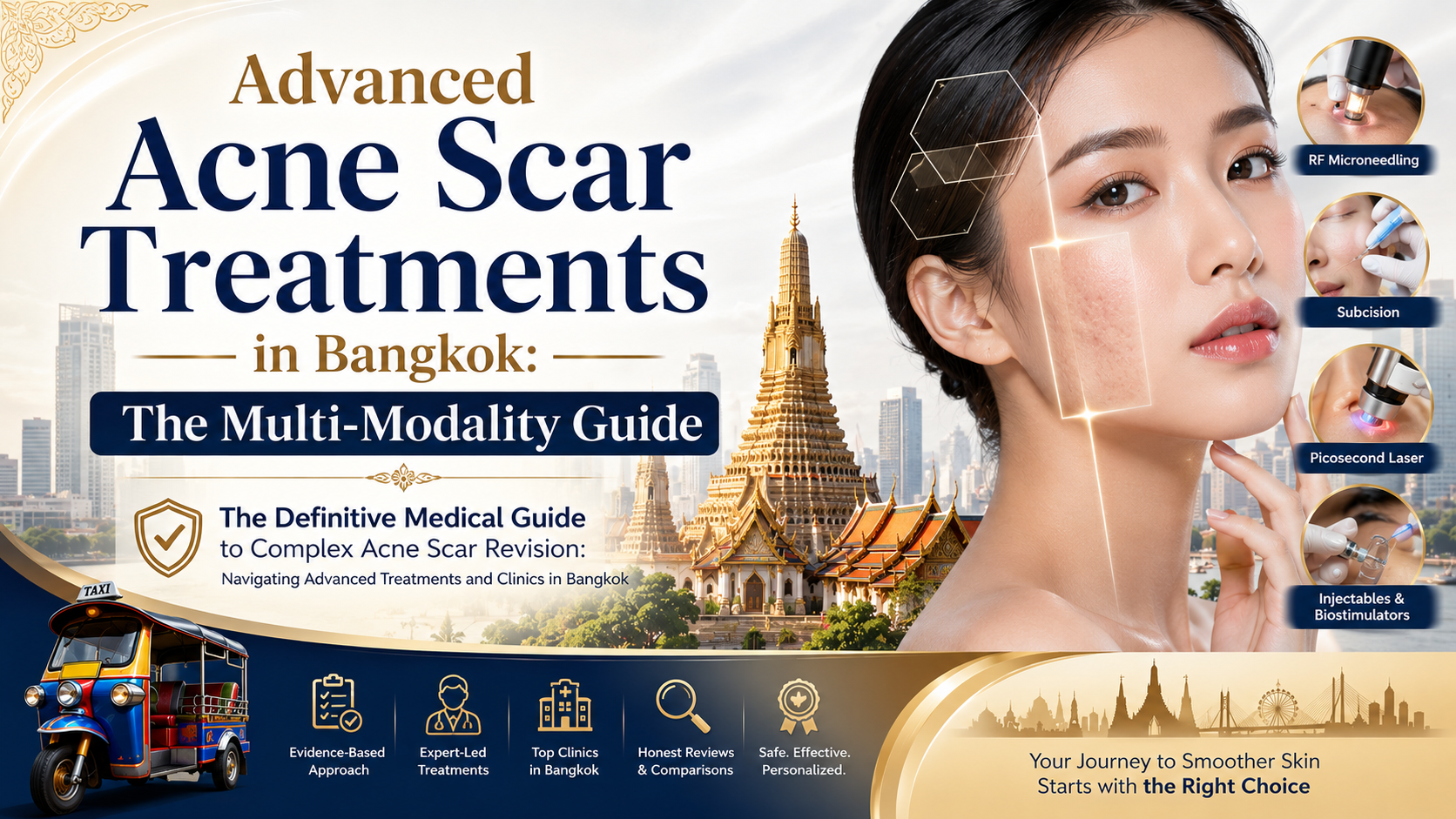
Advanced Acne Scar Treatments in Bangkok: The Multi-Modality Guide
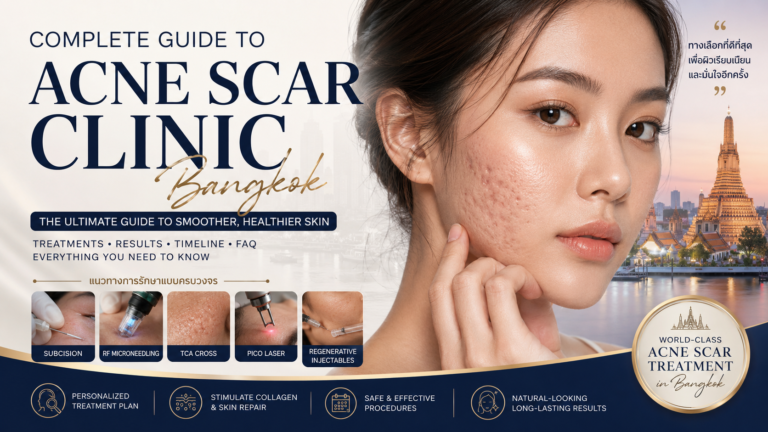
Looking for advanced acne scar treatment in Bangkok? Learn how personalized combination therapy using Subcision, RF Microneedling, TCA CROSS, Pico Laser, Rejuran S, and Juvelook can improve rolling, boxcar, and ice pick acne scars with minimal downtime.
The Definitive Medical Guide to Complex Acne Scar Revision: Navigating Advanced Treatments and Clinics in Bangkok
For millions of individuals worldwide, the resolution of inflammatory acne is not the end of a dermatological battle, but the beginning of a far more complex and psychologically taxing challenge: structural acne scarring. Unlike superficial pigmentary changes, true acne scars represent permanent, multi-layered architectural damage to the skin’s extracellular matrix.
In recent years, Bangkok, Thailand, has emerged as a premier global epicenter for advanced clinical dermatology. Combining cutting-edge energetic devices, pioneering surgical subcision techniques, and world-class medical expertise at highly competitive price points, the city draws thousands of domestic and international patients seeking definitive skin restoration.
However, the rapid commercialization of the aesthetic industry presents a major challenge for consumers. With countless clinics marketing identical machinery, distinguishing between assembly-line commercial treatments and bespoke, evidence-based medical excellence is difficult.
This technical guide offers a deep dive into the clinical science of scar tissue, breaks down the mechanisms of gold-standard treatments, addresses the specific needs of melanin-rich skin, and provides an objective framework for choosing the best acne scar clinic Bangkok for your unique skin profile.
1. The Complex Science of Acne Scar Tissue: Why “Simple Fixes” Fail
To understand why a generic, single-modality treatment plan will almost always yield disappointing results, one must examine the complex structural changes that happen beneath the skin’s surface. An acne scar is not merely a localized depression; it is a three-dimensional zone of altered anatomy involving the epidermis, dermis, and subcutaneous tissue.
The Inflammatory Cascade and Fibroplasia
When a severe acne lesion—such as a deep suppurative nodule or cyst—ruptures, it unleashes a destructive cascade of inflammatory mediators, including interleukins, tumor necrosis factor-alpha (TNF-alpha), and matrix metalloproteinases (MMPs). These enzymes degrade the surrounding dermal architecture, destroying the intricate network of Type I and Type III collagen, as well as elastin fibers.
The body’s subsequent wound-healing response is divided into three overlapping phases:
- Inflammatory Phase: Neutrophils and macrophages clear cellular debris.
- Proliferative Phase: Fibroblasts migrate to the site to synthesize a temporary extracellular matrix.
- Remodeling Phase: This phase can last for over a year, during which the temporary tissue is reorganized.
If the inflammatory response is abnormally prolonged or if the synthesis of new matrix material is insufficient, the skin tissue collapses inward, resulting in an atrophic scar. Conversely, if the healing process produces an uncontrolled, excessive amount of collagen, a hypertrophic or keloidal scar is formed.
The Four Major Morphological Profiles
A skilled clinical provider must carefully evaluate and map out the specific types of scars on your face, as each type requires a completely different treatment approach.
Atrophic Acne Scars:
  ├── Icepick Scars ───────► Deep, narrow (<2mm) V-shaped tracts extending into the deep dermis.
  ├── Boxcar Scars ───────► Wide, round/oval depressions with sharp, vertical, well-defined walls.
  └── Rolling Scars ──────► Broad (>4mm), undulating depressions anchored by deep fibrous bands.
- Icepick Scars: Characterized by narrow (less than 2mm), deep, and sharply demarcated tracts that extend vertically down into the deep dermis or upper subcutaneous layer. Because their root sits far below the surface, superficial resurfacing methods like microdermabrasion or light chemical peels are completely ineffective.
- Boxcar Scars: These are round-to-oval depressions with sharp, distinct vertical edges. They feature a flat, wide base and can be shallow (0.1–0.5mm) or deep (0.5mm). The vertical walls catch directional light easily, making these scars highly visible and requiring targeted edge-smoothing and base-elevation techniques.
- Rolling Scars: These manifest as broad, undulating depressions, often wider than 4–5mm. They give the skin an uneven, rolling texture under dynamic lighting. Rolling scars are caused by abnormal fibrous bands of collagen in the deep dermis and subcutaneous layer that physically pull the overlying epidermis downward. Treating these requires physically severing the internal bands.
- Hypertrophic and Keloid Scars: Unlike the three atrophic types above, these are raised, firm nodules caused by an overproduction of collagen. Hypertrophic scars remain within the boundary of the original acne lesion, whereas keloids grow beyond the original borders. The treatment goal here is to reduce tissue volume and slow down cellular growth rather than stimulating new collagen.
2. Gold-Standard Clinical Modalities in Bangkok’s Top Practices
Achieving high-level scar revision requires an artful combination of various energetic, mechanical, and chemical modalities. Top-tier specialists in Bangkok use an array of advanced medical systems to treat different depths and tissue types.
Picosecond Lasers with Micro-Lens Arrays (MLA)
The introduction of picosecond lasers represents a monumental shift from older nanosecond systems (such as traditional Q-Switched Nd:YAG lasers). By delivering energy in ultra-short bursts—one-trillionth of a second—picosecond technology minimizes thermal damage and maximizes mechanical action.
When paired with a Fractionated Micro-Lens Array (MLA) or Diffractive Lens Array (DLA), the laser beam is split into a grid of highly concentrated, high-peak-power micro-beams. This gives rise to a critical phenomenon known as Laser-Induced Optical Breakdown (LIOB).
Where is peak intensity, is pulse energy, is the ultra-short pulse duration (picoseconds), and is the focused focal area of the micro-lens. This extreme intensity ionizes dermal tissue, creating microscopic plasma cavities beneath the surface without burning the outer skin.
- The LIOB Advantage: LIOB triggers a powerful localized wound-healing response deep within the skin. This stimulates fibroblasts to produce a surge of fresh Type I and Type III collagen and elastin, all while keeping the surface skin (stratum corneum) completely intact.
- Clinical Implications: Traditional fractional ablative lasers (like traditional CO_2) often require 7 to 14 days of wet, raw downtime. Picosecond lasers with MLA, however, offer a much faster recovery. Patients typically experience only 2 to 4 days of mild redness or tiny red spots (petechiae). Because it minimizes heat buildup, this technology also significantly reduces the risk of Post-Inflammatory Hyperpigmentation (PIH), making it an exceptionally safe option for Asian skin tones.
Fractional Radiofrequency (RF) Microneedling
Fractional RF Microneedling is an exceptionally effective modality that combines mechanical skin puncturing with targeted thermal energy. It uses a grid of ultra-fine, gold-plated micro-needles that penetrate the skin at precisely controlled depths, typically ranging from 0.5mm down to 4.0mm. Once the needles reach the targeted dermal layer, they emit a precise burst of bipolar radiofrequency energy.
- Why It Excels: Standard lasers deliver energy from the top down, meaning the energy naturally fades as it goes deeper. RF microneedling, however, delivers thermal energy directly inside the dermis while bypassing the epidermis completely. This makes it incredibly safe for darker skin types (Fitzpatrick Skin Phototypes IV–VI), as the risk of overheating surface melanin is virtually zero. It is highly effective for tightening loose skin around scars and lifting deep boxcar and rolling scars.
Advanced Surgical Subcision
Because rolling scars are held down by tough, fibrous bands beneath the surface, surface-level devices cannot fully lift them on their own. Surgical subcision is the essential solution needed to free these anchored tissues.
[Epidermis & Dermis]
      │   (Depressed Surface)
      ▼
 ╭─────────╮
 │  SCAR   │
 ╰─────────╯
      │
      ├─── [Fibrotic Bands / Collagen Anchors] ───► Pulling skin down
      │
      ▼
==================================================================
 [Surgical Instrument: Nokor Needle / Cannula / Wire] ───► Fan-Like Motion
==================================================================
      │
      ├─── Severing and releasing the fibrous bands
      │
      ▼
[Immediate Elevation of Skin] + [Controlled Subdermal Hematoma Scaffold]
- The Technique: The dermatologist inserts a specialized surgical instrument—such as a tri-beveled Nokor needle, a sharp-tipped cannula, or a specialized surgical wire—parallel to the skin surface into the subdermal plane. Moving the tool in a gentle, fan-like pattern, the doctor cuts and releases the fibrous bands that pull the skin down.
- The Biological Benefit: Severing these bands allows the depressed skin to immediately pop back upward. The controlled trauma also creates a small pool of blood (hematoma) beneath the scar. This blood pocket is rich in natural growth factors and acts as a biological scaffold, stimulating new connective tissue growth that prevents the scar from re-tethering as it heals.
Chemical Reconstruction of Skin Scars (TCA CROSS)
For narrow, deep icepick scars and deep mini-boxcar scars, wide-beam lasers are ineffective and can inadvertently widen the scar opening. The CROSS technique addresses this through precise, focal chemical reconstruction.
- The Technique: A high concentration of trichloroacetic acid (TCA), usually between 50% and 100%, is applied directly into the base of the icepick scar using a fine-tipped applicator or a wooden toothpick.
- The Reaction: The acid causes immediate protein denaturation, which shows up as a bright white “frosting” strictly confined within the scar tract. Over the next few days, a tiny crust forms. This targeted chemical action triggers deep dermal remodeling, forcing the deep, narrow tract to gradually heal and close from the bottom up over a series of sequential sessions.
3. The Power of Multi-Modality Synergy
Many patients feel frustrated when they do not see results after purchasing a generic, single-technology package (such as “6 sessions of standard fractional laser”). True clinical success depends on multi-modality synergy—combining multiple specialized techniques during a single session or over a structured timeline to address every layer of tissue damage simultaneously.
| Modality Name | Primary Structural Target | Target Dermal Layer | Primary Biological Mechanism | Typical Recovery Window |
| Picosecond Laser (MLA) | Boxcar/Rolling Scars, Fine Texturing, PIH/PIE | Epidermis to Mid-Dermis | Photoacoustic shockwaves & cavitation (LIOB) | 2–4 Days (Erythema/Petechiae) |
| Surgical Subcision | Tethered/Anchored Rolling Scars | Deep Dermis to Subcutaneous | Mechanical release of fibrotic bands & hematoma formation | 5–7 Days (Swelling/Bruising) |
| TCA CROSS | Deep Icepick Scars, Patulous Pores | Deep Dermal Tracts | Focal chemical cauterization & localized collagen synthesis | 5–7 Days (Micro-crusting) |
| RF Microneedling | Deep Boxcar/Rolling Scars, Skin Laxity | Adjustable Dermis (0.5mm – 4.0mm) | Targeted radiofrequency coagulation bypassing the epidermis | 3–5 Days (Grid marks/Mild swelling) |
| Ablative Fractional Laser | Severe Boxcar Scars, Fibrotic Texturing | Epidermis to Deep Dermis | Photothermal vaporization of micro-columns & skin tightening | 7–14 Days (Exudate/Crusting) |
Designing a Custom Multi-Modality Session
A true scar revision specialist in Bangkok will often perform several advanced techniques in a single, layered session:
- Deep Structural Release: The physician starts with surgical subcision to release the deep, fibrous bands holding down rolling scars across the cheeks.
- Focal Treatment: Next, the doctor applies high-concentration TCA CROSS precisely into the deep icepick pits on the nose or temples.
- Surface & Mid-Dermal Remodeling: Finally, the doctor treats the entire area with a fractionated picosecond laser or an RF microneedling device. This smooths out shallow boxcar scars and creates a widespread wave of collagen synthesis across the newly liberated tissues.
By addressing the structural damage at every layer of the skin simultaneously, these treatments complement each other, delivering far more significant and natural-looking results than any single device could achieve on its own.
4. The Asian Skin Dilemma: Preventing Post-Inflammatory Hyperpigmentation (PIH)
For patients with Asian skin (typically Fitzpatrick Skin Phototypes III, IV, and V), scar revision requires an incredibly careful and specialized approach. Asian skin has unique anatomical and biological traits that demand strict modifications to standard treatment protocols.
The Problem with Overactive Melanocytes
The main challenge with Asian skin is its abundance of active melanocytes—the cells responsible for skin pigment. When the skin is exposed to excessive heat or intense structural trauma, these melanocytes can easily become hyper-reactive.
If a clinic uses overly aggressive, high-heat thermal treatments (like un-fractionated or high-energy ablative $CO_2$ lasers), the intense heat often triggers a secondary inflammatory response. This frequently leads to Post-Inflammatory Hyperpigmentation (PIH), leaving patients with dark, muddy brown patches that can take 6 to 12 months to fade, causing significant emotional distress.
Post-Inflammatory Erythema (PIE)
Many lighter Asian skin profiles are also highly prone to Post-Inflammatory Erythema (PIE), which shows up as persistent red or purple marks. This is caused by microvascular damage and dilated capillaries from acne inflammation or overly strong laser settings. Treating PIE requires specialized vascular lasers (such as Long-Pulsed Nd:YAG or Pulsed Dye Lasers) to safely collapse the dilated capillaries without overheating the surrounding skin.
Advanced Protocols Used by Top Bangkok Specialists
To minimize these risks, the best acne scar clinic Bangkok will implement strict protective measures:
- Prioritizing Mechanical Action Over Heat: Utilizing picosecond systems allows doctors to achieve deep tissue remodeling through gentle photoacoustic shockwaves (LIOB), keeping the surrounding pigment-producing cells cool and undisturbed.
- Pre-and Post-Treatment Priming: Specialists often prime vulnerable skin with topical tyrosinase inhibitors (such as hydroquinone, kojic acid, tranexamic acid, or azelaic acid) for several weeks before advanced procedures to calm down melanocyte activity.
- Gradual Parameter Escalation: Rather than attempting to clear deep scars in a single, aggressive session, expert doctors use conservative, multi-session treatment plans, safely increasing energy settings over time as they monitor the skin’s unique healing response.
5. Strategic Framework: Selecting a Premier Scar Revision Clinic in Bangkok
The medical aesthetics industry in Bangkok is growing rapidly, but this expansion means commercial marketing can sometimes cloud genuine medical quality. To protect your health and your investment, use this rigorous framework when evaluating clinics.
Verify the Physician’s Specialized Expertise
The single most critical factor in your scar revision journey is the skill of the physician operating the medical devices.
Inspect the Clinic’s Technology Lineup
A clinic’s equipment reveals a lot about its treatment philosophy. During your consultation, ensure the clinic invests in genuine, FDA-approved systems from reputable global medical manufacturers.
- Authentic Picosecond Lasers: Look for verified systems . Be cautious of clinics offering generic “Pico” treatments using low-cost, unbranded machines; these systems often lack stable pulse durations and can cause surface burns or permanent pigment loss (hypopigmentation).
- Authentic RF Microneedling Devices: Look for industry-standard systems like Potenza (Cynosure), Infini MFR (Lutronic), Secret RF (Cutera), or Morpheus8 (InMode). These devices utilize advanced computerized depth settings and high-quality needles to deliver uniform, stable energy directly to the targeted layer of skin.
Analyze the Initial Consultation Process
An experienced dermatologist will always perform a thorough, comprehensive evaluation before recommending any procedure. A top-tier consultation should include:
- Dynamic Physical Examination: The doctor should gently stretch your skin with their fingers under directional lighting to see if your rolling scars resolve. If a scar flattens when stretched, it can be treated primarily with energy devices. If it remains depressed, it confirms that surgical subcision is required to release the deep fibrous bands.
- A Clear, Realistic Plan: The physician should outline a personalized timeline (e.g., “4 combination sessions spaced 6 weeks apart”), discuss the expected percentage of improvement (typically 40% to 80% depending on severity), and clearly detail the anticipated downtime and risks.
6. What to Expect: The Realities of Your Healing Journey
Undergoing a comprehensive scar revision protocol requires patience and realistic expectations. This is not an overnight fix; it is a gradual process of biological tissue regeneration.
The True Timeline of Collagen Production
When an energy device or surgical needle creates a controlled micro-injury, it triggers a cascade of cellular events. While surface redness heals within a few days, the actual production of new collagen (neocollagenesis) and tissue reorganization takes time.
- Phase 1: Inflammation (Days 1–3): The skin experiences redness, swelling, and increased fluid flow as it clears away damaged tissue.
- Phase 2: Proliferation (Weeks 1–4): Fibroblasts migrate to the micro-wounds and begin building initial, temporary collagen structures.
- Phase 3: Maturation & Remodeling (Months 1–6+): The temporary tissue is gradually replaced by stronger, highly organized Type I collagen. The skin matrix tightens, lifting the scars.
Because this biological process is gradual, you will likely see the definitive, permanent results of a single session 3 to 6 months after the procedure. Consistency and patience are key.
Essential Professional Aftercare
To ensure optimal healing and prevent secondary complications like dark spots or infection, following a strict post-procedure routine is vital:
- The First 24–48 Hours: Keep the skin clean and well-hydrated. Avoid makeup, fragrances, and active acids (such as Retinol, Vitamin C, Glycolic Acid, or Salicylic Acid). Use only a gentle, mild cleanser and a sterile recovery balm or ointment (such as Aquaphor, Cicalfate, or Cicaplast).
- Sun Protection is Essential: Bangkok features a high UV index year-round. Newly treated skin is highly vulnerable to UV radiation, which can easily trigger severe PIH. You must apply a broad-spectrum, high-SPF physical sunscreen (SPF 50+, PA++++) daily, wear wide-brimmed hats, and avoid direct sun exposure for at least two weeks post-treatment.
- Allow Crusts to Shed Naturally: If modalities like TCA CROSS or ablative fractional lasers are used, small micro-crusts and scabs will form. Let them shed naturally. Picking them off prematurely exposes raw, unhealed skin, which can cause permanent scarring or dark spots.
7. Maximizing Outcomes: Advanced Regenerative Adjuvant Therapies
To speed up tissue recovery and boost collagen production, leading clinics in Bangkok frequently combine advanced energy devices with modern regenerative therapies.
Polynucleotides (PN) and Salmon DNA (e.g., Rejuran Healer)
Polynucleotides are highly purified DNA fragments extracted from salmon cells, which closely match human DNA structure. When injected into the dermal layer alongside acne scar treatment Bangkok, PN acts as a powerful cell-stimulating agent. It binds to cell receptors to boost fibroblast activity, dampens overactive inflammation, and accelerates skin regeneration. This helps reduce laser downtime while significantly enhancing the overall scar-lifting effect.
Exosomes: The Frontier of Regenerative Medicine
Exosomes are microscopic extracellular vesicles secreted by stem cells. They act as natural cellular messengers, packed with vital growth factors, signaling peptides, microRNA, and anti-inflammatory proteins.
Applying pure, lab-certified exosomes to the skin immediately after fractionated laser or RF microneedling treatments allows the vesicles to easily slip down through the open micro-channels directly into the deep layers of the skin. They send rapid signals to target cells to accelerate healing, dramatically reduce post-laser redness, and stimulate a surge of high-quality collagen production.
Autologous Platelet-Rich Plasma (PRP)
PRP therapy involves drawing a small sample of your own blood, spinning it in a specialized centrifuge to concentrate the blood platelets, and extracting the nutrient-rich plasma layer. This solution is packed with natural growth factors (such as PDGF, TGF-beta, and VEGF). Injecting or topically applying your own PRP during a subcision session provides an immediate, natural healing boost that accelerates tissue repair and minimizes internal scarring.
Conclusion: Investing in Long-Term Skin Restoration
Acne scars can feel like a heavy emotional and physical burden, but modern advancements in dermatological science have made successful revision entirely achievable. Bangkok offers an exceptional landscape for scar revision, pairing cutting-edge technologies like Picosecond lasers, RF microneedling, and subcision with world-class medical expertise.
The key to achieving transformative, life-changing results lies in avoiding generic, heavily discounted commercial packages. Instead, look for a customized, multi-modality approach designed specifically for your unique skin type and scar profile.
By prioritizing board-certified dermatologists, verifying that the clinic uses authentic, FDA-approved devices, and committing to a diligent post-treatment recovery plan, you can confidently navigate your path to smooth, radiant, and flawless skin.
Take your time to research, consult with true medical experts, and choose the best acne scar clinic Bangkok to embark on a safe, highly successful skin transformation journey.